

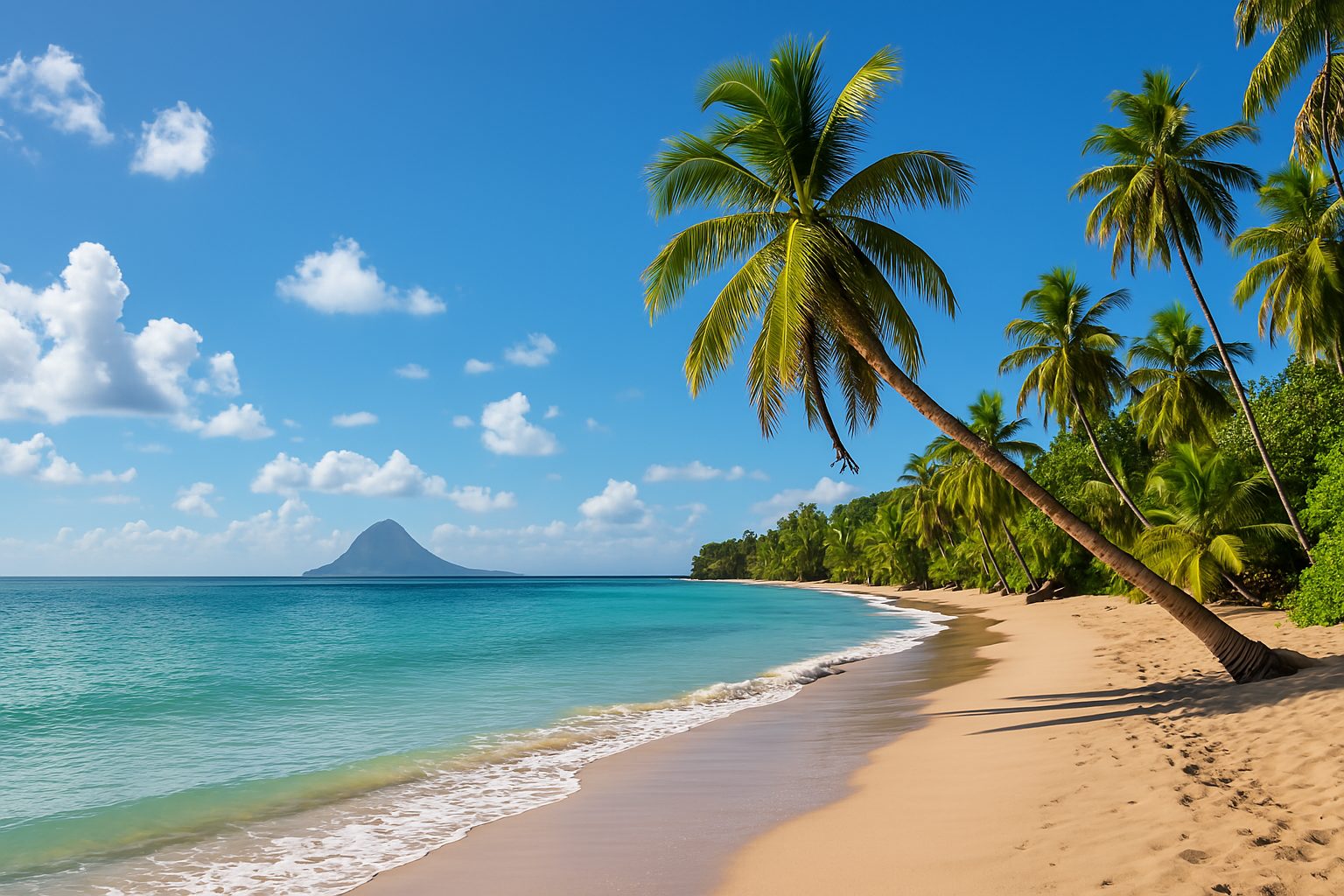
When should you go to Martinique? If you want generally drier weather, aim above all for February to April, the Carême (dry season). For a good balance between visitor numbers and weather, May–June or November can work well. December and January are a climatic transition: the festive atmosphere is remarkable, but showers are still possible. The best time to go therefore depends on your budget, your activities and how much tropical rain you are willing to put up with.
This guide is based on the reference climate described by Météo-France Martinique. Averages are not a forecast for your travel dates.
What is the best season to visit Martinique?
Martinique has a tropical climate that is warm all year round, with differences in rainfall far more pronounced than changes in temperature. Terrain, altitude and exposure to the wind can create very different conditions between the North and the South on the same day.
February to April: the Carême, generally drier
According to Météo-France Martinique, the Carême is the dry season, mainly from February to April. Average rainfall is lower and the days are often bright. It is a good time to pack in hikes, boat trips and walks. That said, it can still rain, especially in the hills and mountains.
July to October: the hivernage, wetter
The hivernage (wet season) runs mainly from July to October. It is marked by greater heat, high humidity and more frequent showers, which can be intense. There are sunny spells, but it is best to plan flexible activities and not to underestimate rivers or trails after heavy rain.
May–June and November to January: transition months
Between the two main seasons, conditions are more variable. November, December and January should not be considered uniformly dry months; conversely, May and June do not necessarily bring rainy weather every day. These periods are a good option for planning a balanced, adaptable stay.
Martinique month by month: what to choose?
| Month | General trend | Our tip |
|---|---|---|
| January | Transition to the Carême | Enjoy the beaches and explore the interior, have a rainy-day option |
| February | Carême, generally dry | Hikes and days at sea |
| March | Carême | Explore trails early in the morning and the coves |
| April | End of the Carême | Combine swimming with discovering the North |
| May | Transition, rain sometimes more frequent | Plan flexible excursions |
| June | Transition to the hivernage | Alternate morning outings and cultural visits |
| July | Hivernage | Stay flexible depending on the showers |
| August | Hivernage, heat | Keep an eye on the weather and limit long walks in the middle of the afternoon |
| September | Hivernage and hurricane season | Choose flexible bookings |
| October | Hivernage, more frequent rainfall | Have several back-up plans |
| November | Transition, end of hurricane season | Cultural events and outings to adjust as needed |
| December | Transition to the Carême | Experience the Christmas traditions and book popular activities |
When to go for beaches and snorkelling?
You can enjoy the sea all year round, but how comfortable swimming is also depends on the swell, wind, currents and underwater visibility. Turquoise water does not mean conditions are always safe. Check the local situation on the day of your outing, especially if you are travelling with children.
If you dream of seeing turtles, discover the areas where they are sometimes spotted in Martinique. The Marine Nature Park (Parc naturel marin) reminds visitors to stay at the surface, not to chase the animals and to keep a distance of around five metres.
When to come for hiking and the North?
The Carême months generally offer more favourable conditions for nature outings, but Montagne Pelée and the forests of the North have their own microclimates. Even in the dry season, a summit can be shrouded in cloud and a trail can become slippery. Always choose your route according to the weather, the state of the ground and your fitness level.
You can alternate a day of hiking with a guided excursion in the North to discover the landscapes without making your whole group take on a long walk.
Which period to choose to pay less?
Flight and accommodation prices vary with school holidays, events, demand and availability: it would be misleading to promise that any one month is always the cheapest. Instead, compare several weeks, book early if your dates are fixed and choose cancellable options whenever possible.
Hurricane season: should you avoid Martinique from June to November?
The Atlantic hurricane season officially runs from 1 June to 30 November, although a hurricane is not expected in Martinique every year. A weather event can nevertheless seriously disrupt a trip. Seasonal forecasts cannot tell in advance where a storm will pass; keep an eye on alerts from Météo-France and on instructions from the prefecture.
If you travel during this period, choose transport and accommodation with suitable change conditions, stay flexible and avoid booking activities that are not compatible with rough seas.
Best time to go depending on your type of trip
- First visit and seeing it all: February to April, to make the most of days outdoors.
- Christmas holidays: December, for the Chanté Nwèl, the markets and Creole traditions; book in advance.
- Keen hikers: the generally drier period, without overlooking the North’s microclimate.
- Snorkelling: above all, choose a day when sea conditions are suitable rather than relying on the month.
- More flexible budget: compare trips outside school holidays, with activities you can book according to the weather.
Some activity ideas whatever the season
You can combine an excursion to the Atlantic bays, a day of snorkelling and a visit to the villages or the North. To plan your stops without endless driving, start from our 6-day Martinique itinerary.
During very busy periods, check availability for an excursion to the fonds blancs (white sandbanks) and the Baignoire de Joséphine or a turtle-friendly snorkelling trip with the providers selected by Kajola.
Frequently asked questions
What is the driest month in Martinique?
The Carême, mainly from February to April, covers the months that are generally the least rainy. For detailed climate normals, see Météo-France Martinique.
Does it rain all day during the hivernage?
No. Showers, sometimes intense, alternate with sunny spells, but some weather disturbances can last. Duration and intensity vary from day to day and from area to area.
Is December already the dry season?
According to Météo-France, December is rather a transition period towards the Carême. It can bring lovely days, but its average rainfall is not the same as in the heart of the dry season.
Can you visit Martinique without a car?
Yes, for a focused stay, but a car often makes it easier to get between beaches, villages and excursion starting points. Check transport options before choosing your accommodation.
In short: the best month depends less on a promise of constant sunshine than on your priorities. For a first visit focused on the outdoors, February to April remains a sensible choice; for a cultural experience, December has a special charm. Kajola selects local providers to help you plan your days, without organising the excursions directly.